


Root canal treatment removes an infected or inflamed nerve from inside a tooth, then cleans, seals and protects the tooth so you can keep it. At Northalsted Dental Spa in Lakeview, Chicago, Dr. Griffin performs root canals on front teeth and premolars and refers molars and complex cases to trusted endodontists.
If you have a badly decayed or infected tooth, a root canal may be an effective way to save it. Root canal treatment removes the damaged nerve and infection from inside your tooth so you can avoid an extraction. Without the proper treatment, the tissue surrounding the tooth will also become infected, and an abscess may form.
A common misunderstanding is that it would be better to pull a bad tooth than to save it. This simply is not true. Pulling a tooth is a more invasive procedure and can cause significant issues for surrounding teeth. The tooth’s nerve is not essential to its function, and removing the nerve should not affect it in any negative way.
At Northalsted Dental Spa in Chicago, our goal is to stop your pain, protect your health, and help your teeth function comfortably again. Dr. Michael Griffin provides root canal procedures for front teeth and premolars. Contact us today to schedule an appointment!
If you are searching for a root canal dentist near me or root canal therapy near me, we see patients from Lakeview, Wrigleyville, Boystown, Buena Park, Uptown, Andersonville, Edgewater and Rogers Park.
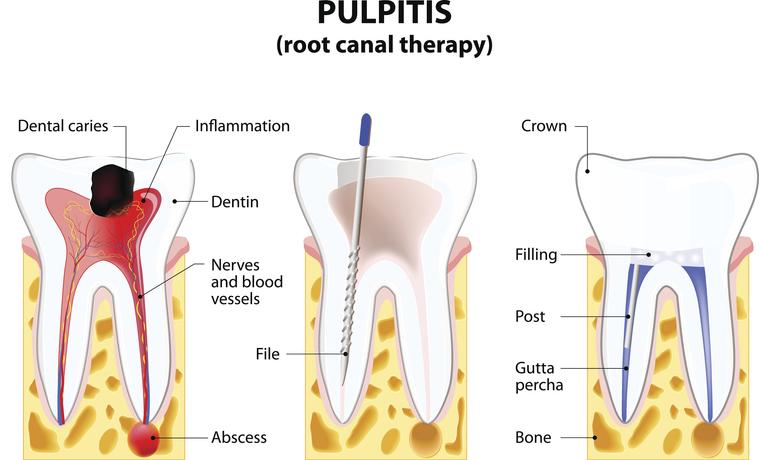
What Is a Root Canal?
A root canal procedure is a restorative dental treatment that cleans and disinfects the inside of a tooth when the pulp becomes infected or inflamed. The tooth pulp houses nerves and blood vessels. Infection or inflammation can happen due to:
- Deep decay
- A crack or chip in the tooth
- Trauma or injury
- Multiple dental procedures on the same tooth
During root canal treatment, the pulp is removed, and the inside of the tooth is cleaned and shaped. The space is filled to seal and protect it, usually with a material called gutta-percha. Your dentist will typically apply a dental crown over the tooth afterward to restore strength and appearance. This is also called root canal therapy or endodontic treatment, and the filled canals are sometimes called root canal fillings.
Many people ask, “What is a root canal, and is it painful?” Thanks to modern techniques and local anesthesia, most patients say the procedure feels similar to getting a regular filling.
Reasons for Root Canal Therapy
Root canals are primarily performed on severely damaged teeth, such as when:
- Decay has reached the tooth pulp
- An infection or abscess has developed
- Injury or trauma to the tooth has occurred
Dr. Griffin will inform you of every step of the root canal procedure to ensure you feel comfortable throughout the process.
Signs You May Need Root Canal Treatment
You may need a root canal if you notice:
- Severe or lingering tooth pain
- Sensitivity to hot or cold that doesn’t go away
- Swelling, tenderness, or a bump (abscess) on the gums
- Darkening or discoloration of a tooth
- Discomfort while eating or biting down
If you have any of these symptoms, it’s important to see a dentist as soon as possible. Ignoring the problem can allow infection to spread and may lead to tooth loss or other serious oral health issues.
Root Canal and Endodontic Emergencies
Severe toothache, facial swelling or a gum abscess is an endodontic emergency, and the sooner the tooth is examined the better the chance of saving it. Call us first thing, and see our dental emergencies page for what to do in the meantime. Same-day visits may be available. Go to the emergency room for swelling that affects your breathing or swallowing.
The Root Canal Process
Wondering what happens during a root canal procedure? Here is the typical process at Northalsted Dental Spa:
- We carefully examine your affected tooth and take dental X-rays to see the shape of the roots and the extent of the issue.
- A local anesthetic is used to numb the tooth and the surrounding area so you stay comfortable throughout treatment.
- A small opening is made in the tooth to reach the infected pulp.
- The pulp, nerve tissue, and bacteria are removed. The root canals are gently cleaned, disinfected, and shaped.
- We fill the root canals with a biocompatible material to seal them and help prevent future infection.
- A temporary filling is usually placed until your tooth heals from the procedure. Then, a permanent filling can be completed. Your dentist will usually apply the permanent filling 1-2 weeks following the procedure.
- In many cases, a crown is recommended to protect the tooth in the long term.
Root canal therapy has a high success rate, and most treated teeth can last many years or even a lifetime with good care.
Aftercare and Recovery Following a Root Canal
After your root canal procedure, it’s normal to feel some mild tenderness or sensitivity for a few days. Your dentist will provide appropriate aftercare instructions.
For the best healing and results:
- Do not bite down on the treated tooth until it has been completely restored with a permanent filling/crown.
- Brush and floss gently around the area.
- Follow any specific instructions given by our team about eating, drinking, and medications.
- Call our dental office if you experience significant pain, swelling, or anything that doesn’t feel right.
Good at-home dental care and regular dental visits help keep your treated tooth healthy and functional.
Why Root Canals Are Important for Oral and Overall Health
Root canal treatment offers several benefits:
- Saves your natural tooth
- Helps maintain proper chewing, bite alignment, and jawbone support
- Prevents infection from spreading
- Prevents neighboring teeth from shifting
- Supports overall health, as oral infections have been linked to other health problems
While it may sound easier to remove a tooth, extraction often leads to more complex and costly treatment later, such as dentures, implants, or bridges. A dental root canal is usually a conservative and long-term solution to fixing damaged teeth.
Endodontic Care at Northalsted Dental Spa
At our dental office, Dr. Griffin provides skilled endodontic treatment for specific teeth, including:
- Front teeth (anteriors)
- Premolars (bicuspids)
For more complex cases involving molars, or when advanced care is needed, we partner with a network of trusted root canal specialists (endodontists) in the Chicago area. This team-based approach ensures you always receive the right care for your situation. If you are looking for a board certified endodontist near me or an endodontic clinic, we will refer you to one of these partners when your tooth needs specialist care.
Cost of Root Canal Treatment in Lakeview
The cost of a root canal depends on which tooth is treated, how complex the case is and whether you need a crown afterward, and your dental insurance may cover part of it. We explain the estimate before treatment. Financing is available for those who qualify, and our specials page lists any current offers for new patients.
Root Canals Near Lakeview, Wrigleyville and Boystown
A few blocks from Wrigleyville, Northalsted Dental Spa is located at 3710 N Halsted St, Chicago, IL 60613, in the Northalsted district of Lakeview. The Addison Red Line station is about a 10-minute walk away, and the 8 Halsted bus stops nearby, making visits convenient from Boystown, Buena Park, Uptown, Andersonville, Edgewater or Rogers Park. We offer daytime and evening appointments, with Saturday visits available by appointment. Please check our contact page or call us for current office hours and availability. New patients can complete the new patient form online before their visit.
Schedule Your Root Canal Consultation
If you’re experiencing tooth pain, sensitivity, or think you might need a root canal, don’t wait. Early diagnosis can often save your tooth and prevent more serious dental problems.
Call Northalsted Dental Spa today or set up an appointment online for a root canal in Chicago. Our friendly team is here to help relieve your pain and protect your oral health. We use state-of-the-art dental technology to provide personalized dental services in a welcoming, inclusive environment.
Frequently Asked Questions About Root Canals
Is a root canal painful?
The tooth is numbed with a local anesthetic, and most patients say the procedure feels similar to getting a regular filling. Some mild tenderness for a few days afterward is normal.
How long does a root canal take?
After the root canal, a temporary filling is usually placed. Your dentist usually completes the permanent filling 1 to 2 weeks later, and a crown is often recommended to protect the tooth. We can give you a timeline for your tooth when you schedule.
Does Dr. Griffin treat molars?
Dr. Griffin performs root canals on front teeth and premolars. For molars and more complex cases, we partner with trusted endodontists in the Chicago area so you get the right care.
Is Dr. Griffin an endodontist?
Dr. Griffin provides root canal treatment as part of his restorative dentistry care. When a tooth needs an endodontist, we refer you to one of our specialist partners.
Can a tooth that already had a root canal be treated again?
Sometimes a treated tooth becomes painful or infected again. Call us so Dr. Griffin can examine the tooth and X-rays and tell you whether it can be retreated in our office or needs a specialist.
Is it better to pull a tooth than get a root canal?
Saving the natural tooth is usually preferred. Pulling a tooth is more invasive and can cause problems for the surrounding teeth, and replacing it later often takes more treatment.
Do I need a crown after a root canal?
In many cases, yes. A crown protects the treated tooth and restores its strength and appearance, so Dr. Griffin will usually recommend one.